As mentioned previously, in “Impossible Voyages” I’m watching and writing about a run of new (to me) science fiction films to be watched over last year, which has extended to this year (2026). You can read the rationale and ground rules here. In the meantime, we are advancing from 1947 to 1948 with this movie, #26 in this series.
For almost a decade of these “Impossible Voyages” movies, the offerings I’ve been checking out have been pretty “low-brow”–mostly ridiculous monster movies, often featuring some sort of body horror. Like, we’ve had people turning into apes, apes turning into people, people turning into other sorts of monsters, people being shrunk down to the size of dolls, and all sorts of other kinds of lurid goofiness. Some of these films have been good, some have been bad, but none are what you could really call “serious” science fiction. Really, it’s been since The World Will Tremble (1939) that would fit into that category.
So with all that said, I thought it was time go back to that well!

Spoilers Ahead
Krakatit (1948)
Directed by Otakar Vávra
The Story: A seriously unwell patient is looked after by a doctor and a nurse. As he receives treatment, we see delirious vision of his life, which may or may not correlate with reality. These visions indicate that he is a scientist named Prokop who has invented a devastating explosive that he has named “krakatit” (after the volcano Krakatoa). The destructive potential of this substance drives him to the brink of insanity, and he also becomes the focus of various political powers that are interested in the substance for their own purposes. Against his will, krakatit is used to destroy several cities, and in the end, only the thought that he can use his genius toward inventions that will help humanity rather than destroy it brings him any peace of mind.
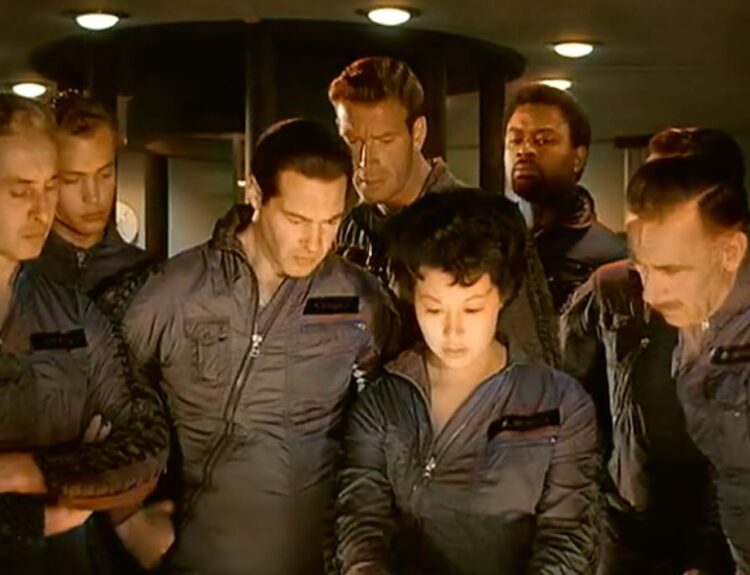
Starring: Karel Höger as Prokop. Florence Marly is Princess Wilhelmina Hagen, a representative of a country that is interested in the krakatit. Eduard Linkers is Carson, a foreign weapons manufacturer who wants to exploit the explosive for profit. Jiří Plachý is d’Hémon, an ambassador from another country who wants to use krakatit. Miroslav Homola is Tomeš, Prokop’s old colleague from university who is also interested in the explosive. František Smolik plays is Tomeš’ father, a doctor who helps Prokop when he is injured, and Nataša Tanská is his daughter with whom Prokop is briefly romantically involved. Vlasta Fabianová plays a mysterious veiled woman who asks for Prokop’s help delivering a message to Tomeš.

Comments: So, watching a “serious” science fiction movie means it’s probably going to be a bit more demanding, intellectually, then something like, well, The Ape Man for instance. The fact that it is from Czechoslovakia, a country I have never been to (and technically never will, since it no longer exists by that name) makes it even more challenging. And the fact that the film is driven by surrealism as much as it is by science fiction is perhaps the most difficult thing of all, when it comes to trying to interpret it. Or even to understand it.
Thankfully, the movie tells you right at its outset that “The action takes place in the fancy of feverish dream,” so we know we are not meant to take everything at face value. However, I actually failed to see this bit of text on my first time watching the movie, which meant that I did spend a lot of my time trying to apply both real-life and movie-making logic to it. Goes to show what you miss when you aren’t paying proper attention!

And if you don’t pay attention to Krakatit, you are likely to miss a lot. Even before the more overtly surrealistic elements kick in, the movie is a lot like the fever dream it promises. As we initially go into the mind of our mysterious hospital patient, it seems like things are going to make logical sense. We hear, for instance, that Prokop was found at a river embankment, and as the visions begin, he is on an embankment, looking like a guy who might wind up later that night in the hospital. But no–instead we see him meet a university colleague, Tomeš, and go back to his place to rest. And from there we are led into a series of vaguely related encounters that Prokop experiences that at first seem like they are going to add up narratively, but in reality are connected by an unsettling sort of dream-logic.
For instance, when Prokop wakes up, he finds that Tomeš has left abruptly, presumably with Prokop’s formula for his devastating krakatit invention (named after the volcano Krakatoa), apparently to ask his father for money, but also possibly to kill himself. Then a mysterious veiled woman shows up and pleads with Prokop to find Tomeš and deliver a letter from someone to him. Prokop seems to be instantly in love with this woman, even though he’s just met and doesn’t know her name, and she seems taken with him in return.

He goes off to find Tomeš’ father but finds his old friend hasn’t been there. Then he promptly passes out, wakes up not being able to really remember anything, and starts romancing Tomeš’ sister Ancǐ. This seems reasonably serious until he remember krakatit, remembers his promise to the veiled woman, and leaves abruptly. Ancǐ and her father never appear again…and except for one brief moment, neither does Tomeš! We never find out what was in the letter and we never find out who the veiled woman was, though she seems to appear later on briefly as a different character.
Instead Prokop connects with a charming but untrustworthy weapons manufacturer (Carson) who traps him in a kingdom called Battlin where he is forced to work on krakatit. He meets the local Princess who is stunningly beautiful and who absolutely throws herself as Prokop with a kind of wild abandon. He is swept the thrill of it all until he realises that her interest is part of her country’s efforts to arm themselves for war using krakatit. He rails at her for this, wondering if she’s even human…

…and then her face disappears and she turns into a kind of a mannequin! And now, if we weren’t sure, we know that serious naturalistic storytelling is not on the table here.
The rest of the movie involves Prokop escaping Battlin with d’Hemon, a representative of a different country, who takes him to a war rally where Prokop is held up as a hero who will lead them to military victory. He rejects this and a sample of krakatit gets thrown to the ground and everyone scrambles for it in a mad rush. This seems to have been d’Hemon’s intention, as he then reveals his country has the ability to set off krakatit by remote control, which he promptly starts to do, blowing multiple cities, including the people at the rally as well as Balttin. Prokop starts to strangle d’Hemon, D’Hemon vanishes and Prokop is seemingly teleported to a huge paved surface some distance from Tomeš lab. Prokop manages to deliver the letter to an underling, but not to warn Tomeš before the krakatit destroy this lab.

All of this stuff is most of the movie–the “meat”, so to speak, of Prokop’s dream. And yet plot-wise it doesn’t really add up to anything with any clarity. What it does show, consistently, is the way that Prokop’s invention weights on him–his guilt, his fear, the terrible terrible burden of having created something which could lead to cataclysmic destruction, and perhaps even the end of the world. Throughout all the strange events that he goes through, Prokop’s emotional turmoil is the one consistent thingt. Everything we see is either the guy trying to hide from his past, trying to fix it, trying to forget it, feeling trapped by it, trying to fight back against it or reluctantly giving in to it.
And throughout we regularly cut back to the framing device of the hospital, usually in brief images Prokop’s face as he’s suffering and maybe dying. Only at the end, as Prokop muses with an old mail carrier about the possibility of turning his inventive genius toward something that will help humanity–a low cost fuel that will provide heat and light to people–does Prokop find peace. This is true in the visions, and it’s true on the hospital bed. Our last moment reveals that he is recovering now, and the camera pans over to the “?” written over his bed, indicating that the hospital staff have no idea of his name. And for all we know, neither do we!

So I don’t presume to understand everything that the filmmakers were trying to say with Krakatit, but I don’t think it’s too crazy to speculate that they were feeling the shadow of World War II as they created this work (even though it’s based on a novel that was published in 1922, by Karel Čapek, the same guy who introduced the term “robot”). The war-mongering scene in the military rally is very Nazi-esque, and the whole idea of krakatit potentially threatening the entire world is reminiscent of everything you hear about the development of the atomic bomb.

By 1948, the Czechoslovakian film industry was nationalised, and highly censored, but apparently that didn’t prevent some thoughtful films from being created.
The movie bets everything on the performance of Karel Höger, who remains intense and appropriately unstable throughout, carrying this unconventional material with conviction. Everyone else is good as well but I have to give a special mention to Florence Marly as Princess Wilhelmina, who is riveting as a woman who acts with decorum in public but is absolutely unhinged in her passions when no one is looking.

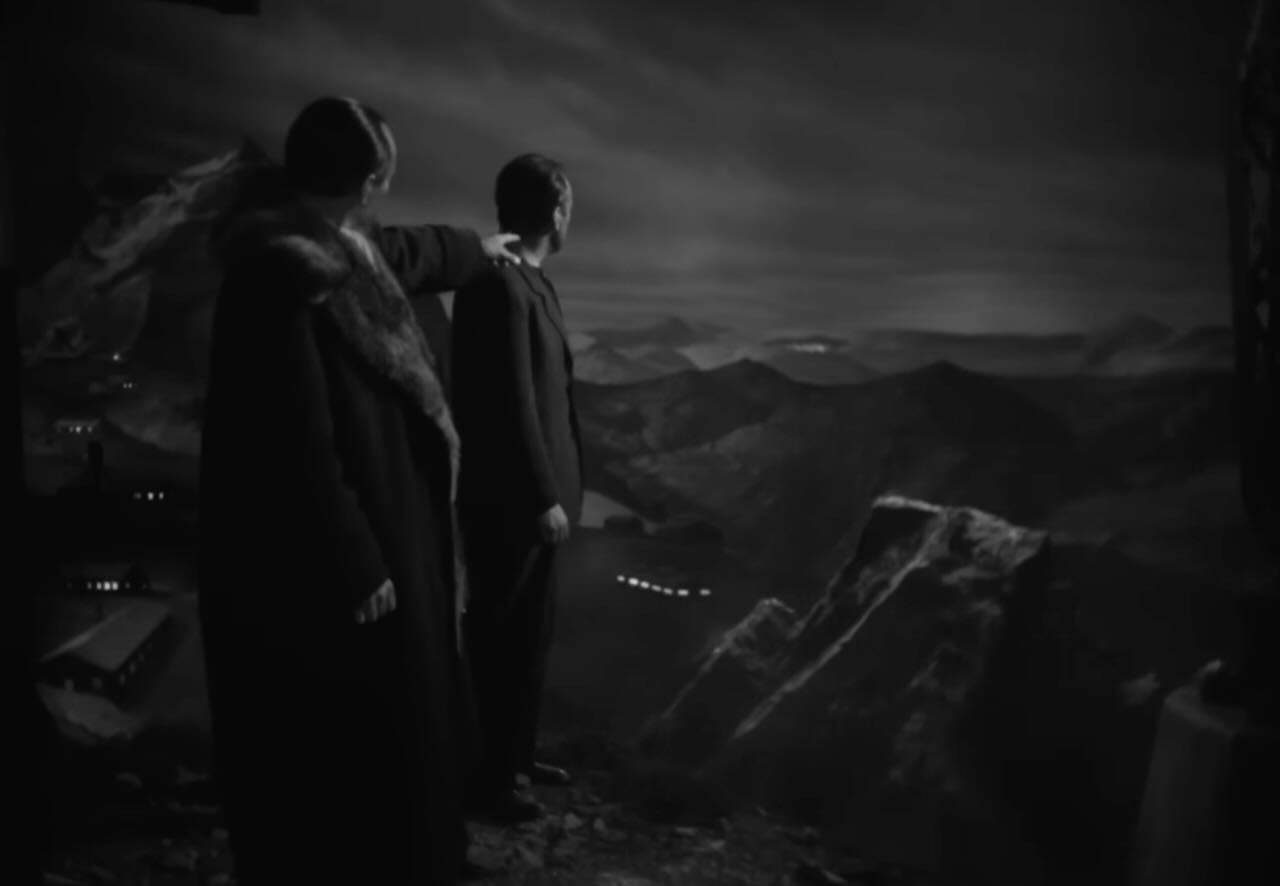
There is also a lot of nice cinematography to look at, but the real appeal of Krakatit is the balance it strikes between normalcy and confusion as it unpacks its themes. It’s not a movie I fully enjoyed watching, but it is one that I’ve ended up thinking about a fair deal, particularly as I’ve made my way through this written response.
And it’s definitely a nice change of pace from the likes of Brick Bradford or The Flying Serpent!
Berita Terkini
Berita Terbaru
Daftar Terbaru
News
Berita Terbaru
Flash News
RuangJP
Pemilu
Berita Terkini
Prediksi Bola
Technology
Otomotif
Berita Terbaru
Teknologi
Berita terkini
Berita Pemilu
Berita Teknologi
Hiburan
master Slote
Berita Terkini
Pendidikan
Resep
Jasa Backlink
Slot gacor terpercaya
Anime Batch