As mentioned previously, in “Impossible Voyages” I’m watching and writing about a run of new (to me) science fiction films to be watched over last year, which has extended to this year (2026). You can read the rationale and ground rules here. In the meantime, we are advancing from 1949 to 1950 with this movie, #28 in this series.
So we enter the 1950s with a film that is so different from anything we have looked at recently that it really does feel like a different era. My viewing run of science fiction movies through the 1940s consisted of two action-adventure serials, one animated short, one surrealist apocalyptic nightmare, and six body-horror / monster movies. But now we transition decades with a piece of genuinely serious science fiction drama.
Spoilers Ahead
Destination Moon (1950)
Directed by Irving Pichel

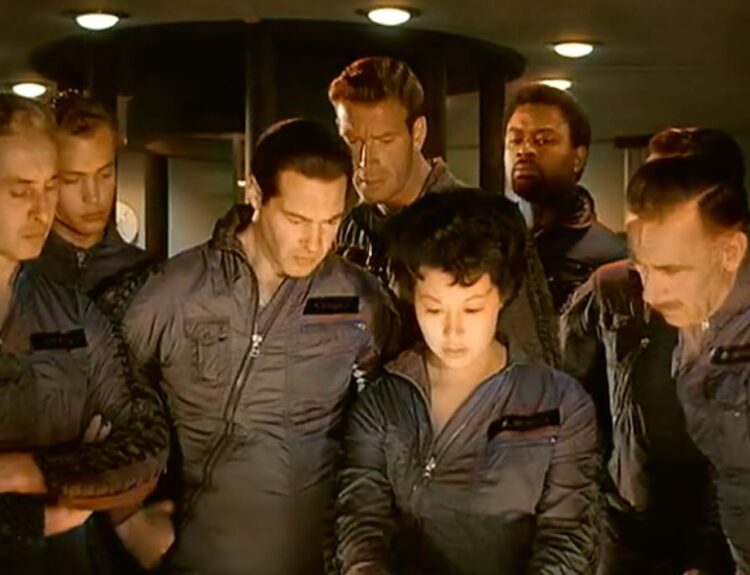
The Story: Industrialist Jim Barnes, rocket scientist Dr. Charles Cargrave and military leader General Thayer team up to develop the first manned space mission to the moon, racing to do this before any other foreign powers can achieve the same thing. They take off ahead of schedule when political pressures almost force them to abort their launch, which results in the untrained radio and radar operator, Joe Sweeney, unexpectedly joining the mission. The crew of four overcome various obstacles and successfully land on the moon. Difficulties with fuel mean they almost have to choose to leave someone behind in order for the rest to return home, but at the last minute Barnes figures out a way to get rid of enough weight off the ship in order for everyone to be able to leave safely.
Starring: John Archer as Jim Barnes, Warner Anderson as Dr. Charles Cargraves, Tom Powers as General Thayer, and Dick Wesson as Joe Sweeney. Erin O’Brien-Moore plays Dr. Cargraves’ wife Emily. Grace Stafford (as well as an uncredited Mel Blanc via archival sound doing the signature laugh) is the voice of Woody Woodpecker, in a in-story cartoon produced to raise funds for the rocket project.

Destination Moon is produced by George Pal, who went on to do War of the Worlds, When Worlds Collide, The Time Machine and more. Pal produced Destination Moon independently, meaning without the backing of a major studio, (the independent company Eagle-Lion Films was also involved). The Woody Woodpecker sequence was by Walter Lantz, who was the characters creator. And contributing to the movie’s screenplay and serving as a technical advisor was noted science fiction author Robert Heinlein, whose own writing served as the basis for the some of the movie.
Comments: Destination Moon is considered by many to be the first American film to take a real look at the complexities involved in actually traveling into space. This is over a decade before President Kennedy spoke to the US Congress about his belief that the country should commit to landing a man on the moon and bringing him back home safely again. And it was almost two decades before the country actually achieved this. But if Destination Moon is any indication, it was something on people’s minds for quite some time before NASA was established and got underway with its activities.

Destination Moon spends a huge amount of time detailing how the whole moon project gets established, and the various organisational, financial and engineering challenges involved in such an endeavor. I presume the whole thing was quite fresh to the original audiences of the day, but to a modern eye the whole thing seems quite didactic. Knowledgeable characters spend ages explaining the science to less knowledgeable characters. In an early sequence where Jim Barnes is trying to sell the idea to a whole bunch of colleagues-in-industry, he actually uses a Woody Woodpecker cartoon specially created for the purpose to give an overview of how rockets can be used to travel in space, and we get to watch the whole thing. Later, the plot contrives to get the skeptical and generally untrained Joe Sweeney onto the mission, where he spends most of his time acting as an audience surrogate so that Cargraves or Barnes can explain to h I’m now-familiar ideas like weightlessness and momentum.
There is some dramatic incident in the midst of all of this, but it’s quite minimal. There is talk of an initial rocket test being sabotaged at the start, but that’s never followed up on. There is brief concern that the launch might be forbidden by a court order, which leads to a rushed take off (and Sweeney’s presence on the mission). And at one point while they are en route to the moon, the characters have to do a spacewalk to effect some repairs and Cargraves’ magnetic boots somehow disconnect and he almost drifts out into space forever. But these moments are few and far between, with the movie instead relying on the novelty of seeing a rocket launch, seeing the characters struggle with the g-forces involved, seeing them deal with the lack of gravity and all the rest of it, to sustain interest.

All that meant for me, it was hard not to get restless. I wanted a bit more drama per minute, as much as I can appreciate what the movie was doing and what makes it so notable as a piece of film history.
And actually, eventually I did get my drama. Suddenly at the end of the movie, there is a whole thing about how they need to reduce the ship’s mass in order to get home safely, and even after all their efforts, it comes down to the fact that one of the four men is going to have sacrifice himself so that the others can live. This leads to quite a gripping scene where Cargraves, Barnes and Thayer all argue about why they should be one. No one considers Sweeney because it’s been clear that he never wanted to be on the mission in the first place, but before they know it Sweeney has taken the only space suit and exited the ship, ready to take the hit himself for the sake of all the others. Only then does Barnes come up with a way to solve the problem in the first place, allowing everyone to come home together. But along the way the movie delivers some real tension–I was genuinely wondering who was going to “win” this argument. I assumed it was going to be Barnes until Sweeney took it upon himself to leave the ship, and then as they were racing to put Barnes’ plan into action I was legitimately worried about everyone.

So yeah, the movie’s most compelling story beat comes right at the end, which I guess is how it should be. I just wish it hadn’t been the only that had my attention like this–I would have enjoyed the experience of watching it a lot more.
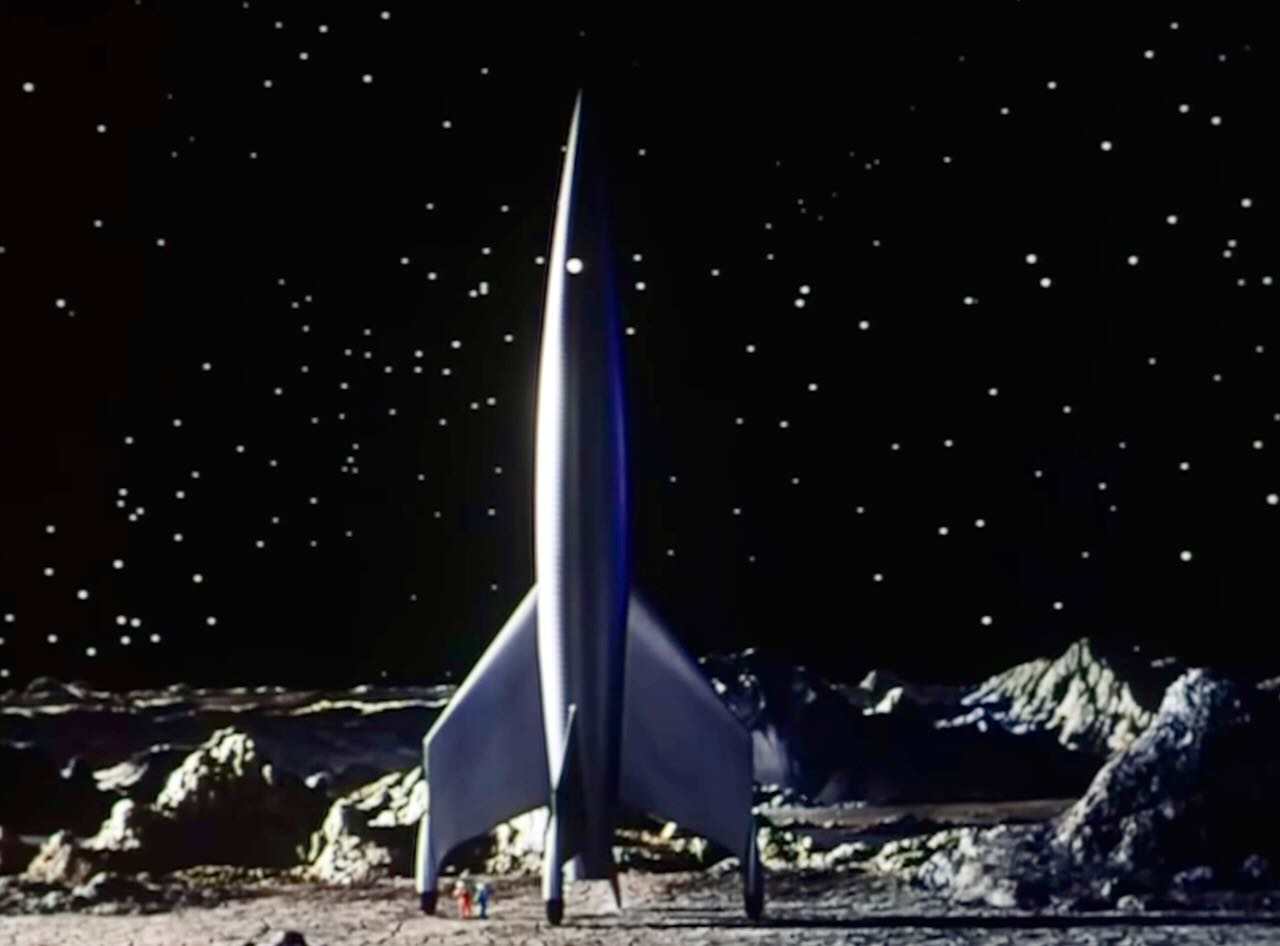
That isn’t to say there aren’t other things I appreciate about Destination Moon. The rocket ship that takes our characters to the moon is just amazing looking–simple but sleek, with a pulp-adventure sort of look that blends nicely with the movie’s more serious, procedural tone.

And while the special effects are obviously dated, they are also impressive. I like the look of the moonscape particularly.
And I liked how the film took seriously the idea of man’s first words spoken the moon. The line they give Dr. Cargraves isn’t quite as succinctly poetic as that spoken by Neil Armstrong in real life, it still has a sense of purposefulness that, like a lot of this film, anticipates real-life history to come: “By the grace of God, and the name of the United States of America, I take possession of this planet on behalf of, and for the benefit of, all mankind.”
PakarPBN
A Private Blog Network (PBN) is a collection of websites that are controlled by a single individual or organization and used primarily to build backlinks to a “money site” in order to influence its ranking in search engines such as Google. The core idea behind a PBN is based on the importance of backlinks in Google’s ranking algorithm. Since Google views backlinks as signals of authority and trust, some website owners attempt to artificially create these signals through a controlled network of sites.
In a typical PBN setup, the owner acquires expired or aged domains that already have existing authority, backlinks, and history. These domains are rebuilt with new content and hosted separately, often using different IP addresses, hosting providers, themes, and ownership details to make them appear unrelated. Within the content published on these sites, links are strategically placed that point to the main website the owner wants to rank higher. By doing this, the owner attempts to pass link equity (also known as “link juice”) from the PBN sites to the target website.
The purpose of a PBN is to give the impression that the target website is naturally earning links from multiple independent sources. If done effectively, this can temporarily improve keyword rankings, increase organic visibility, and drive more traffic from search results.