Doctor Who has long been my favorite show, but it’s been a couple of years since I’ve actually watched anything but the newest episodes. Before that, I was making a respectable run at getting through the original series, most of which I haven’t seen for decades. For various reasons, lately it has felt like it’s time to get back into it.
The War Machines
Starring William Hartnell as the First Doctor.
Companions: Michael Craze as Ben Jackson, Anneke Wills as Polly and Jackie Lane as Dodo Chaplet.
Written by Ian Stuart Black. Directed by Michael Ferguson. Produced by Innes Lloyd. Script Edited by Gerry Davis. From a story idea by Kit Pedler (misspelled “Pedlar”)
Format: 4 episodes, each about 25 minutes long
Originally Aired: June – July 1966 (Episodes 42-45 of Season 3)

Finishing off the third season of Doctor Who (back in the days when the seasons breakdowns didn’t really make any difference to the story structures) was The War Machines, a serial that is significant to the series in a bunch of ways. It was written by Ian Stuart Black had also written the previous serial, The Savages, making it the first time in the show’s history that the same writer is credited for back-to-back stories, something that would only happen three more times in the classic era, before coming more commonplace in the modern era with the idea of “Head Writers.”
But this is a pretty minor development for The War Machines–there are other things that are far more salient things that were part of the series’ evolution, particularly when viewed with the benefit of hindsight.

Spoilers Ahead!
The most notable thing about The War Machines, in terms of a “first”, is the fact that this is the very first time that the not only took place entirely in the modern day, but had its story steeped in a modern-day setting. Obviously, An Unearthly Child, the first episode, was in the modern day, and so were segments of The Chase and The Massacre. And Planet of the Giants was pretty much all set in the modern day, but still in a way that isolated the Doctor and the companions from the familiar world. In The War Machines, there is no attempt to do that.

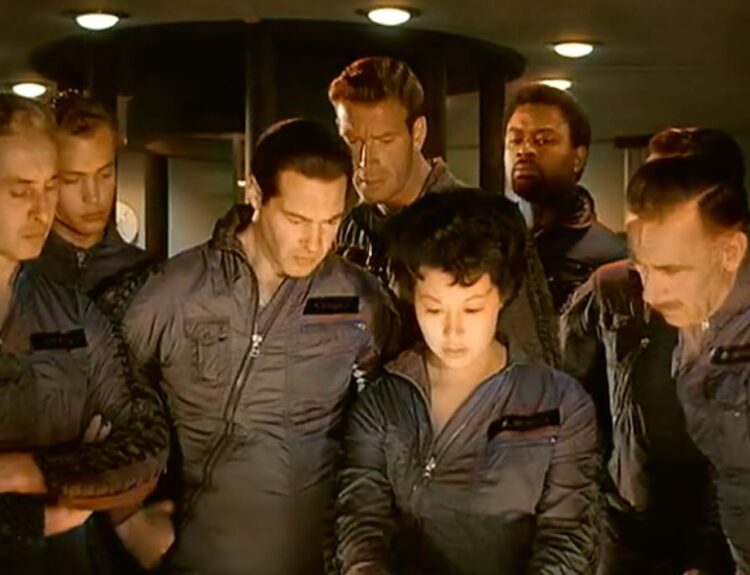
The Doctor and Dodo arrive in present-day London, have a look at what was a brand new landmark of the day (the Post Office Tower) and then launch straight into a crisis of great public significance. Rather than keeping a low-profile, the Doctor interacts with government leaders and military commanders, and basically takes charge of the whole situation. And the story wastes no time with this: it’s almost instantly that the Doctor senses some sort of evil from the tower, and before any time has passed he’s talked his way in the heart of everything and is figuring out the potential threat. It all has an extremely modern-series feeling to it–tweak the dialogue and add some psychic paper and you can completely imagine the scenario playing out with the Tenth Doctor and Martha Jones.
The Doctor interfacing with local military and political structures would happen again with the Second Doctor and then become commonplace with the Third, but this was the very first time anything like this took place. It is a far cry from where the show started, back when the Doctor basically kidnapped Ian and Barbara for fear that they might tell someone about him.
But it’s a cool development that is welcome at this point in the series’ history. I know I recently wrote about both The Space Museum and The Chase, and mentioned how much I enjoyed how much time is spent with the characters just living their lives or walking around and exploring, but still I feel this more plot-focused approach is part of the show’s growing up, and something it needed to do.

And William Hartnell get to play perhaps his most directly active version of the Doctor that I can remember. The scene at the end of the third episode when everyone is fleeing for their lives as the War Machine approaches, and the Doctor just stands there, staring it down, is awesome.

The War Machines is also the very first time in the show’s history that there is a “complete turnover” of companions. It begins with Dodo arriving with the Doctor and by the end she is gone and Ben and Polly have been introduced and are whisked away to their next adventure. In terms of these transitions, the story is a mixed bag–some of it is incredibly successful and some of it is a miserable failure.
Let’s get the failure out of the way first, because it’s so glaringly obvious. I’ve written before that Dodo Chaplet’s exit from the show is the very worst companion-departure that the show has every produced, an assertion I’d still hold onto even in the wake of the nonsense of how Belinda Chandra’s story ended in the show’s most recent season. Apparently Jackie Lane’s contract expired midway through this serial, and instead of hiring her for a couple of extra episodes or doing something else to deal with the character properly, she is just sent off to have a rest after the Doctor un-hypnotizes her in part two.


It’s quite the ignominious last moment for a character who presumably, the audience was meant to care about.

At the end of the story, the Doctor is seen waiting around for her but instead of appearing, she sends a message via Sir Charles who sends it via Polly to tell the Doctor she’s staying and thanks for everything, see you alter. The Doctor is understandably miffed by this, and that’s it for Dodo (except for some depressing stuff in the world of spin-off media, see below)
I’ve read that producer Innes Lloyd later apologised to Jackie Lane, saying she was a victim of circumstance, but when you see how he dealt with the departures of her successors, Ben and Polly, it’s hard not to see it as something a blind spot for the producer.
But speaking of Ben and Polly, they both make their debut here, and they both make fantastic first impressions.

This ties into the ways I’ve already mentioned that the show was evolving at this point. Ben and Polly are not the show’s first modern-day companions. They aren’t the first modern-day young companions. But they are the first modern day companions who actually feel like they are part of the modern-day culture of young people.
The extended sequence in the Inferno nightclub especially highlights this. Polly in particularly seems very comfortable in this environment–she’s a kind-hearted, responsible young woman who is also used to going out, dancing, having a drink, flirting with guys, and so on. As a sailor, Ben is from a different world but is still grounded in the same modern-day sensibilities. Anneke Wills isn’t the first companion actress to be attractive, but she’s the first one to be “playing” attractive, and so having her “rescue” Ben from his doldrums, and then having him defend her from a drunk patron who is getting too aggressive comes across as natural, and does well to establish their general dynamic, including the potential attraction between them.

Once Polly gets hypnotised by WOTAN she doesn’t have as much to do, but then it’s Ben’s turn to shine. He gets all sorts of good scenes which demonstrate how brave and dependable he is, including my favorite which is when the Doctor talks about luring a War Machine to a trap which involves connecting some cables behind it. When the Doctor says that this will be his job, Ben replies, “You’re a bit past that sort of lark aren’t you, Doctor?” When asked to clarify, he replies, “Well, I reckon that’s a job for me, sir.” And it is.
There aren’t that many Ben & Polly episodes of Doctor Who out there to be seen–indeed, this is the only story that exists in its entirety. And so I’ve never had as strong a sense of these characters as I’ve had about Ian and Barbara, or Jamie and Zoe, for instance. Much of my exposure to them have been in animated recreations and while I’m extremely grateful that those things exist, they never really give a particularly clear impression of the nuances that the actors bring to their roles. Based on The War Machines, both Michael Craze and Anneke Wills were very welcome additions to the show.

I’ve written a lot about this story without giving any sort of appraisal of its plot or concept at all, so it’s worth also mentioning here how generally good the whole adventure is. The development of the menace represented by WOTAN is a bit repetitive at first, as one person after another gets mind-controlled by the computer. But this is nicely offset by the character work that I’ve mentioned. Then once WOTAN has established his power base things develop at a solid pace.
The big fiasco of a military operation in the third episode is a particular highlight, and is shot and edited very excitingly.


I also like the scene in part four where they capture one of the War Machines.


The climax in which the Doctor reprograms the captured machine to just go in and smash WOTAN is a bit simplistic, and makes the fact that the production team only had one machine-prop to work with pretty obvious (otherwise you’d assume we’d seen one machine flighting another), but it still works dramatically.
It’s interesting that the only villain in this story is WOTAN (“Will Operating Thought ANalogue,” apparently) itself, and not any self-obsessed programmer or creator. In this way it’s very much a story about the threat of technology leading to the dehumanisation of humanity…perhaps another first for the show? At least, I can’t think of another serial that tackled this kind of idea before this. I like the fact that WOTAN speaks (even if what it says is a bit odd, see below) but that it’s not the sort of being one can carry out a conversation with. That gives it an effective non-human quality that keeps it effectively creepy.

The War Machines is a story that I believe has a generally good reputation. However my memories and impressions from having seen it before were a lot more underwhelming. So I am pleased to find that in this case, the reputation trumps my memories. This is an effective story that for the most part does a good job delivering its action and exploring its themes. Dodo’s departure as a regular is a mess, and most of the guest cast are also not all that memorable, but Ben and Polly are introduced to such good effect that it makes up for a lot of that.
Other Thoughts
• The story and writer titles for this episode are done in computer-card type looking font, which is the sort of variation which the show added to things every once in a while. Unusually, the story and writer titles for the middle two episodes popped up after the reprise from the previous episode, which is something I’m only aware of from one other story, The Ambassadors of Death.
• Right near the start of things, the Doctor talks about a premonition he is having, akin to something he’s felt in the past when confronting the Daleks. I have no memory of ever seeing the Doctor have this bad feeling before, unless it’s from The Dalek’s Masterplan? Interestingly though, later information will reveal this is all happening on the same day as The Faceless Ones, which leads straight into The Evil of the Daleks…so the Doctor is right. There are Daleks around.

• So when WOTAN comes online with his voice capability, he announces that “Doctor Who is required!” It goes on to refer to the Doctor as “Doctor Who” a few times, as does the mind-controlled Professor Brett. This is obviously a production error; I’m sure I’ve read some convoluted attempt to explain why WOTAN would say this, but I can’t remember what it was. But the fact that it’s being said only by WOTAN (and someone under its thrall) does leave room for the simple explanation that the computer is simply confused in some manner.
• I remember seeing clip from a contemporary episode of Blue Peter where someone brought the War Machine prop to the studio to demonstrate it. Presenter Peter Purves really did his best to talk up how powerful the thing appeared, but to me the thing just looked flimsy and feeble. They generally look better in the serial, of course–not completely plausible, but for the standards of the show, downright impressive.

• According some expanded universe accounts, Dodo wound up institutionalised following her departure from the Doctor where she suffered shock treatment and killed a guy who tried to rape her. She wound up homeless for a while before beginning to get her life together, only to be killed (while pregnant) by someone hypnotised by the Master. So yeah, awesome happy ending there.
• However, other expanded universe stories do give Dodo a happier ending, or at least contradict the tragic one mentioned above.
• A number of guest actors in The War Machines had roles in other Doctor Who stories. These include John Harvey (Brett) and Sandra Bryant (Kitty) who both appeared in The Macra Terror. Ric Felgate (Roy Stone, a journalist) was later in The Seeds of Death and The Ambassadors of Death. Carl Conway (who played another US journalist in The War Machines) was also in The Seeds of Death. John Rolfe (army Captain) had small roles in The Moonbase and The Green Death, while Frank Jarvis (army corporal) had small roles in Underworld and The Power of Kroll. Gerald Taylor, who operated the War Machine and provided the voice of WOTAN, was a Dalek operator in all the major Dalek stories of the 1960s, and played various other creatures and small roles as well.
• Kenneth Kendall was a real-life newsreader who happens to be the first ever newscaster to deliver the news on-camera, back in 1955.

He played himself in the last episode of The War Machines. Various people have done this over the years but I’d guess Kendall was the first, or at least, the first to do it in footage originally shot for the show. The Beatles had played themselves in The Chase, but that was via footage from an episode of Top of the Pops.
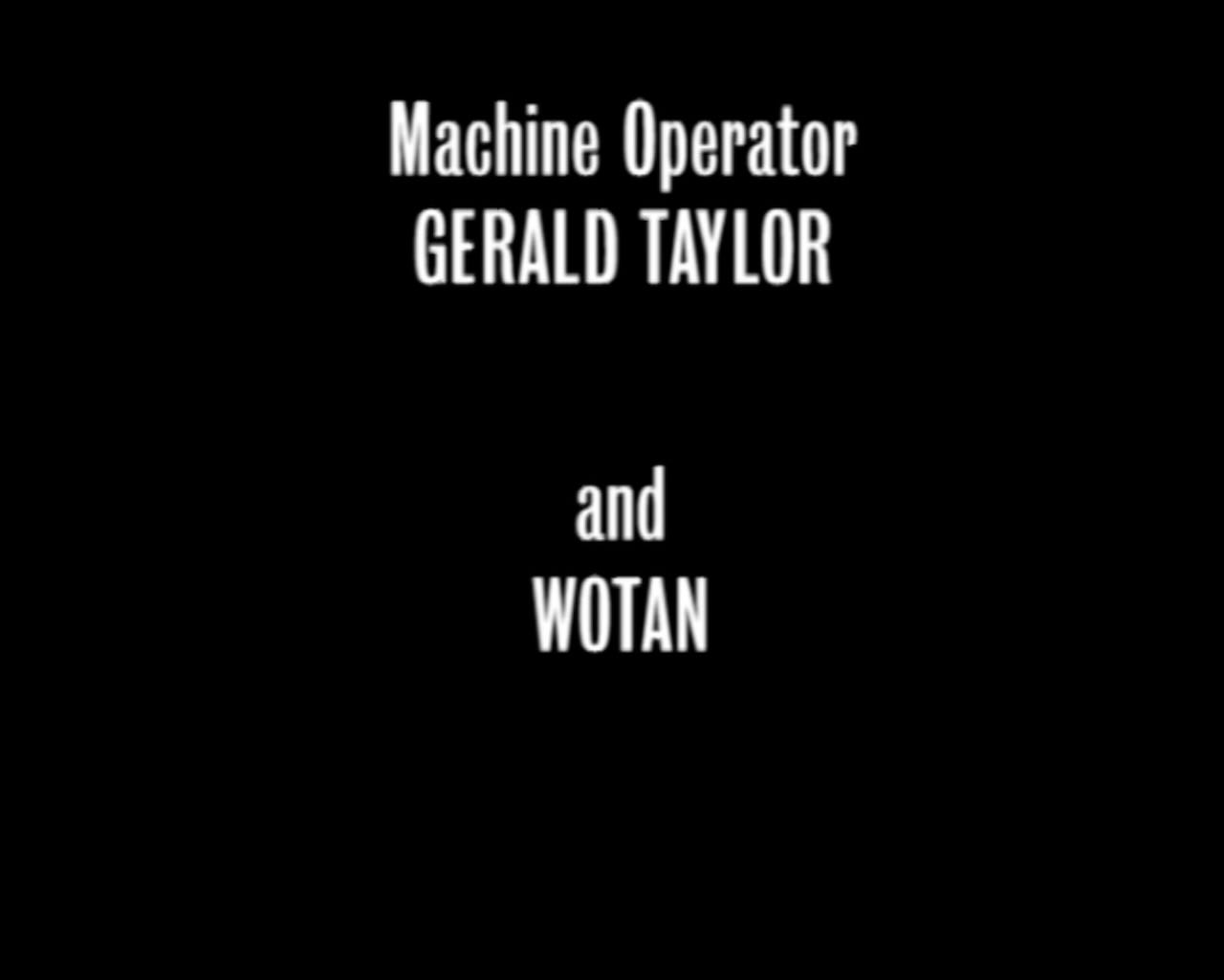
• Finally amongst the guest cast, WOTAN is actually credited (simply as “and WOTAN”) for the first three episodes of the show.

This is the only time in the series’ history, apparently, where a fictional character received an on-screen credit.
PakarPBN
A Private Blog Network (PBN) is a collection of websites that are controlled by a single individual or organization and used primarily to build backlinks to a “money site” in order to influence its ranking in search engines such as Google. The core idea behind a PBN is based on the importance of backlinks in Google’s ranking algorithm. Since Google views backlinks as signals of authority and trust, some website owners attempt to artificially create these signals through a controlled network of sites.
In a typical PBN setup, the owner acquires expired or aged domains that already have existing authority, backlinks, and history. These domains are rebuilt with new content and hosted separately, often using different IP addresses, hosting providers, themes, and ownership details to make them appear unrelated. Within the content published on these sites, links are strategically placed that point to the main website the owner wants to rank higher. By doing this, the owner attempts to pass link equity (also known as “link juice”) from the PBN sites to the target website.
The purpose of a PBN is to give the impression that the target website is naturally earning links from multiple independent sources. If done effectively, this can temporarily improve keyword rankings, increase organic visibility, and drive more traffic from search results.