Doctor Who has long been my favorite show, and after a long time of not really watching it very actively, lately I’ve been deliberately working at rewatching all the available episodes of the classic series, and writing up my thoughts on each adventure. But there are a lot of episodes! So it’s taking a while. For extra fun I’m mostly watching them completely out of order.
Carnival of Monsters
Starring Jon Pertwee as the Third Doctor.
Companion: Katy Manning as Jo Grant
Written by Robert Holmes. Directed by Barry Letts. Produced by Barry Letts. Script Edited by Terrance Dicks.
Format: 4 episodes, each about 25 minutes long
Originally Aired: January-February 1973 (Episodes 5-8 of Season 10)

I’ve been rewatching Doctor Who out of order, and so with Carnival of Monsters I come to my final story of season 10, even though it was the second one to air. It is the first story after the Doctor had his knowledge of time travel restored in The Three Doctors, and the first reference to the famous blue planet of Metebelis III, which would come up recurringly for the Third Doctor’s final two seasons, and be scene on screen twice.
Spoilers Ahead!
Carnival of Monsters has got a pretty good reputation in the world of Doctor Who, but the last time I watched it (many years ago), I remember being underwhelmed. So I was looking forward to seeing who was more accurate, the general fan zeitgeist, or past me. Well, I’m pleased to report that the zeitgeist wins out!

There is a lot to enjoy about Carnival of Monsters, which makes it an interesting and satisfying Doctor Who adventure. Right there on the surface there’s the story’s concept. It’s a nifty idea that the show had never used before, or at least not exactly, in which the TARDIS crew find themselves miniaturised and trapped inside what amounts to a science fiction version of a fishbowl–or really, a whole collection of fishbowls, under the control of some side-show hucksters.
It’s hard for me to judge how easily original viewers would have put together what was going on the first episode, as it cuts back and forth from the Doctor and Jo’s strange experiences on an ocean vessel where things aren’t quite right, and the slightly surreal plight of Vorg and Shirna. These two carnivalesque entertainers spend the start of the story trying to get an entry visa onto overly rule-based world of Inter Minor. But if they weren’t sure that the Doctor and Jo were inside Vorg’s mysterious technology, it becomes pretty clear at the end of episode one, in one of the most bizarre cliffhanger the show ever delivered–the Doctor and Jo are shocked when a giant hand shows up out of the sky and picks up the TARDIS!

The miniscope, as we come to learn, has numerous different environments contained inside of it, each with their own inhabitants, living out some sort of repeating cycle for the benefit of any paying customers who want to check them out. One of those worlds is the S.S. Bernice, a ship from 1926 which the Doctor is familiar with as one that went mysteriously missing (more on this down below), where our time travelers find themselves stuck in a ten minute time-loop which includes, amongst other things, the ship being attacked by a plesiosaur!
It’s one of this era of Doctor Who‘s more surreal outings, and in Vorg and Shirna it even includes the bright and over-the-top gaudy clothes that modern Doctor Who (especially under Russell T. Davies and Chris Chibnall) love to fill their distant future stories with.

And it’s also an exciting story. There are lots of breathless chases with the monstrous Drashigs, and a cool sequence where the Doctor uses the sonic screwdriver to ignite a bunch of gas pockets, leading to an impressive set of explosions and some very unhappy Drashigs.


It’s not the first appearance of the sonic screwdriver, but it’s one of the earlier ones where it takes on the “extreme high-tech / borderline magical” qualities that became common later.
But there’s a lot more than all this to keep this story lively. Even more significant are the characters and dialogue. The plot also works, but it’s in the scene-work that this story really sparkles. Robert Holmes’ script is full of really strong characterisations and people who talk in very specific ways. There’s Vorg and Shirna’s showmanship of course, but it goes way beyond them. The Inter Minorians have a hilariously detached way of speaking about themselves (never using personal pronouns, but instead saying things like “One wonders why the tribunal is submitting to questioning by this creature”) and the three that we meet are all strongly drawn and distinct from each other. Kalik is full of a smiling kind of treachery, Orum nervous and fearful but easily led, and Pletrac loyal to the old ways and the status quo.


Meanwhile on the Bernice, there is another trio in operation–Major Daly (an old colonialist), his sweet but sheltered daughter Claire, and the dashing Lt. John Andrews. Again, each character is given their own clear voice, and each is distinctly drawn–especially Major Daly. It’s like Robert Holmes laced his dialogue with every old-school expression he could (when Jo says she has to find the Doctor, he asks with concern, “Ahh, you feeling a bit umpty? I’m not at all surprised.”). The end results are really fun.
Of course, none of that would work if it weren’t for the performances involved, which are uniformly strong. Tenniel Evans plays Daly, and he’s hilarious, without ever becoming a laughingstock (a trick the modern series hardly ever pulls off with this kind of character, nor seems inclined to try to). Ian Marter (Harry Sullivan to be) and Jenny McCracken shows up as John and Claire, and easily sell a parts that could have been quite bland (Marter gets a nifty scene where he gets to box the Doctor!). And Leslie Dwyer and Cheryl Hall are goofy but strong as Vorg and Shirna.
And a special shout out to the three Inter Minorians–Michael Wisher, Peter Halliday and Terence Lodge.

They manage to take the literally uniform figures of Kalik, Orum and Petrarch and turn them into three fleshed-out individuals, who are frequently have the story’s best and funniest dialogue. Some of my highlights include Kalik saying dryly, at the suggestion that he helped protect the Doctor and Jo because of mercy and compassion, “One has twinges.” Another is Orum nervously declaring, “One has no wish to be devoured by alien monstrosities, even in the cause of political progress.” All three of these actors appeared in Doctor Who multiple times, though Michael Wisher originating Davros a couple of years after this is easily the most famous part amongst them.
Add to that Jon Pertwee and Katy Manning doing their usual solid jobs and you’ve really got a great ensemble here.

Pertwee is especially good–I love the scene where he has to bluster his way to putting the Inter Minor tribunal on the back foot when they are on the verge of punishing him. He plays it totally straight, which makes the scene ever better.
The end result is that even though we constantly circle around the same people–there are essentially only ten characters overall–the story still feels full. The world things are set in–both worlds, really–have a sense of being fleshed out, even if we’re only seeing small corners of them. This is because the people we’re watching are interesting, and their conversations are interesting, so it never feels like things are draggings, even when some of the characters themselves are unknowingly repeating the same actions. This also means that it works perfectly well to keep figures like the oft-mentioned President Zarb off-screen. Hearing him discussed by the members of the Triad makes the character come to life as well as if he had actually shown up and some lines, at some point.

The one thing about the world-building that does leave something to be desired is the whole business with the Functionaries on Inter Minor–the seemingly downtrodden working class. We see them a couple of times and their presence informs the story from time to time, but we never really get a sense of who they are or what their situation really is. It’s not something the Doctor ever becomes concerned about and when Kalik’s revolution has failed, he seems pretty happy to let the existing power structure get on with things, even though presumably that means the Functionaries are as oppressed as they ever have been (of course the Doctor is similarly willing to let Vorg and Shirna go on their way, in spite of how complicit they were to some pretty unjust things.
The other really strong area of Carnival of Monsters that I wanted to mention, aside from the concept and characters, is the production values. Now, take this is in the context of classic Doctor Who, but in general this is a good looking serial. The ship looks great, and the Interminer setting workable, and the giant-size miniscope circuits fun. But of course the real hero of this story are the Drashigs, a monster that Barry Letts apparently considered to be one of the best his era of the show ever pulled off (explaining possibly why they kept showing up in flashbacks before this era of the show was over).

The Drashigs generally look pretty good, but they are also filmed very well, in low angles and slow motion, and with great sound effects to help them feel as convincing as almost anything else the show delivered back in the classic era–certainly anything that was supposed to be so big (I’m looking at you, Invasion of the Dinosaurs!)
Even the CSO work (the colour separation overlay, aka chromakey, where models and so on were mixed live with regular footage, normally a bane of the audience’s suspension of disbelief, works better than normal. The perspective on things like John or Daly looking up and shooting at a Drashig is done pretty well.

I’m not saying it’s perfect, of course, but I find it more forgivable given how convincing the story overall is. The performances also help to sell the effect, especially Michael Wisher’s Kalik when he comes face to face with one of these things that he wanted to use for his own purposes, and realises just how wrong he’s been (it could easily be a moment out of almost any Jurassic Park movie).

(The internet says that Orum also gets eaten, but if that’s true, I missed it).
Surprisingly, the weakest part of the design is something that Doctor Who is normally pretty good at, which are the makeup effects. And it’s not the design for the various aliens that’s the problem (the design is silly, of course, but that fits the story perfectly)–it’s the application. By the end of the story, it becomes apparent that the Inter Minorians makeup is sort of falling apart–you can easily see Michael Wisher’s caucasian skin under his grey make up, and it looks like Terence Lodge’s prosthetic head is beginning to fall off. Maybe the problem was there all along, but by the last episode I couldn’t unseen it.

But yeah, regardless of that kind of thing, Carnival of Monsters is a winner for me. It’s novel, it’s mostly well-produced, and it’s very well written and performed. It’s not a UNIT story so it’s not the most representative of this era, but it’s a great example how fun a Third Doctor adventure can be.
Other Thoughts:
• Carnival of Monsters does some work to flesh out some of the backstory of the Doctor’s life on Gallifrey, something that seemed like a popular thing to do in this era (given that it was the first one after the Time Lord’s were introduced, that’s not surprising. In this case, we learn that the Doctor was largely responsible for getting the Time Lord’s to ban the miniscope.
• A book I once read, I think it was the Doctor Who Discontinuity Guide, pointed out that the S.S. Bernice must have sank sometime after it was returned to its own time, before it arrived in Bombay. This is because it’s clear from the Doctor’s reports that the ship never did arrive where it was going, so there was no place in history for it to “slot in.” However, both this episode and that book were written before the show started making ample use of the idea of “fixed points in time”, and by implication, flexible points in time, where history can actually just change depending on people’s actions. Since I liked Claire, John and Major Daily, I guess I’ll just head canon that that’s what’s going on there and those guys ended up being just fine.

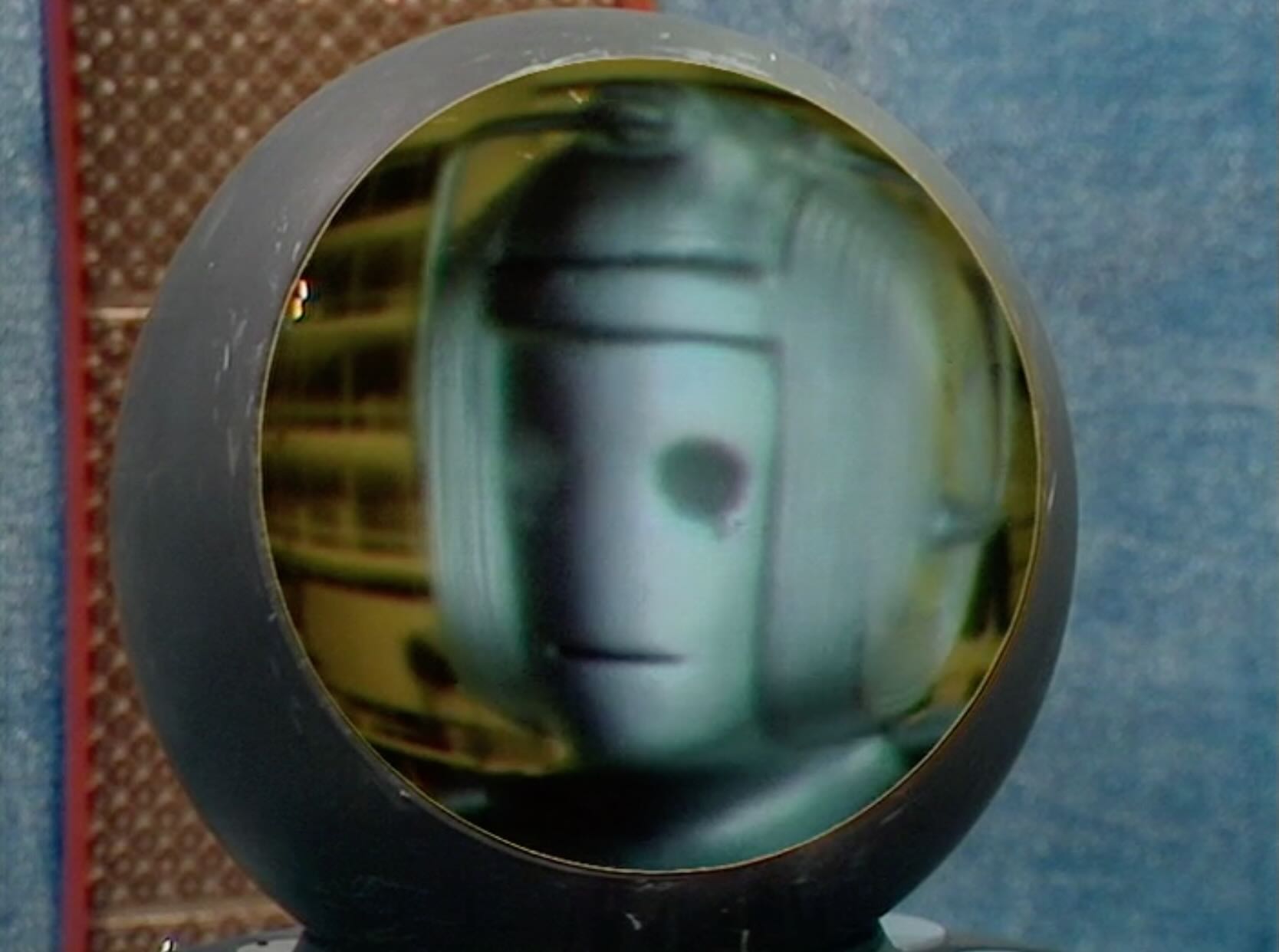
• Both a Cybermen and an Ogron appear in this story, as inhabitants within the miniscope. These were accomplished through new footage–they aren’t flashbacks from previous episodes. This means, contrary to what I thought all these years, the Cybermen do put in an appearance in the Third Doctor’s era of Doctor Who. Not much of one, but it’s there.
Agen234
Agen234
Agen234
Berita Terkini
Artikel Terbaru
Berita Terbaru
Penerbangan
Berita Politik
Berita Politik
Software
Software Download
Download Aplikasi
Berita Terkini
News
Jasa PBN
Jasa Artikel
Situs berita olahraga khusus sepak bola adalah platform digital yang fokus menyajikan informasi, berita, dan analisis terkait dunia sepak bola. Sering menyajikan liputan mendalam tentang liga-liga utama dunia seperti Liga Inggris, La Liga, Serie A, Bundesliga, dan kompetisi internasional seperti Liga Champions serta Piala Dunia. Anda juga bisa menemukan opini ahli, highlight video, hingga berita terkini mengenai perkembangan dalam sepak bola.