Doctor Who has long been my favorite show, but my actual viewing it over the years has been very on-again / off-again. Lately, it’s been all-on, as I’m actually closing in on finishing re-watching all of the classic episodes (at least the ones that are easily available for me to stream), whilst blogging about each serial.
My journey with Doctor Who in some ways began with the Pertwee era, specifically with Colony in Space a couple stories after this one. When my local PBS station got around to running through the Third Doctor stories again, I somehow missed this one, so it was ages before I watched it for the first time (on VHS, I believe). I viewed it again just recently for this post, and I think that’s only the second time that I’ve ever seen it.

The Mind of Evil
Starring Jon Pertwee as the Third Doctor.
Companions: Katy Manning as Jo Grant
Recurring Characters: Roger Delgado as the Master, Nicholas Courtney as Brigadier Lethbridge-Stewart, Richard Franklin as Captain Mike Yates, and John Levene as Sgt. Benton.
Written by Don Houghton. Directed by Timothy Combe. Produced by Barry Letts. Script Edited by Terrance Dicks.
Format: 6 episodes, each about 25 minutes long
Originally Aired: January – March 1971 (Episodes 5-10 of Season 8)

Spoilers Ahead!
The Mind of Evil is the last of the Season 8 serials that I have to rewatch for this run-through of Doctor Who. While I can’t really remember my opinions of Terror of the Autons (my commentary seems pretty positive), I do recall well all the stories that came after this one and from that I’m pretty confident that The Mind of Evil is the season’s strongest offering. In other words, I really enjoyed it.
The plot has got a fair bit going on that nicely fills the runtime without overcrowding it. There is the intrigue at the peace conference, the threat represented by the deadly missile, the escalating tension at Stangmoor Prison, and of course everything with the mysterious Keller Machine and how they are using it to pacify prisoners (a clear homage to A Clockwork Orange). There are elements of espionage, military action and prison conflict which all comes together to give the a very James Bond vibe. Even the Master is cut from the same cloth as a lot of Bond villains, with just some extra sci-fi concepts thrown in.

All of this works well and tin-in together effectively. There is a bit of padding with the back and forth with Jo being taken hostage in prison, escaping and then being captured again. But aside from that the serial is well-paced and full of a fun variety of story beats.
On thing I particularly enjoy about The Mind of Evil is how effectively it makes use of the show’s status quo at the time. We are still deep into the Doctor’s exile on earth at this point–it’ll be another two seasons before it gets lifted, and another two serials before the Doctor is even sent off-world on a mission by the Time Lords. The Doctor we see here is just living his life on earth, steeped in his role as UNIT’s scientific advisor. And when we catchup with him, he’s just off investigating the use of the Keller Machine to change prisoners’ personalities, not because he thinks there’s some alien incursion, but just because it’s inhumane.

It’s the same with UNIT. In this story we find them serving as a military security force–keeping things under control at a peace summit, and disposing of an illegal missile. There’s no big alien threat around, at least that they are aware of, so it’s like a glimpse into the kinds of things they gets up to in between invasions. And I like that. It makes the show’s world feel more real, more lived in, and given our regular earthbound setting, I think this is important.

The UNIT regulars get good showing this time around. Richard Franklin’s Captain Yates has a bunch of cool action scenes and survives getting shot–twice even–with barely a scratch. And John Leven’s Sgt. Benton even has a light story arc–we see him berated by the Brigadier after failing to keep an eye on someone they are suspicious of, we see him stressed out as he carries out his duties afterwards, and then we see him impressing his commanding officer by going the extra mile even when he is injured.

John Levene is fun to watch in these scenes, and it’s nice to see him get rewarded for his steadfastness by being made acting governor of the prison for a while.
Nicholas Courtney does his standard good job as the Brigadier, and even gets a bit of extra fun when he gets to go undercover as a delivery driver for a moment. Fernanda Marlowe also makes her first of two appearances as Corporal Bell, a member of the Brigadier’s support staff–she doesn’t have a lot to do but makes for a nice addition to the ensemble (sadly she only appears again in The Claws of Axos and that’s it).

And Katy Manning’s Jo Grant has a few opportunities to show that she’s actually a trained security agent with some light martial arts and gun-toting going on (though her strange “fall backwards” into Mailer at the end of Episode 5 is less convincing).

But as so often is the case when you have Third Doctor with the Master, the real highlights here are Jon Pertwee and Roger Delgado. Without a doubt they have the best chemistry of any Doctor-Master pairing in the classic era (with only Peter Capaldi / Michelle Gomez giving them any competition in modern times), and are just such interesting antagonists to watch in action.

This story does a lot to dig into their relationship, as well as the Master’s psychology, without actually just spelling everything out. For instance, as almost always happens, the two Time Lords have to work together for a bit of this story, and when they do they feel just as believable as allies as they do enemies. One of the cliffhangers is even resolved with the Master saving the Doctor’s life, something he does through no small effort.

There is a justification for this within the story, but it’s easy to see where modern writers have gleaned the idea that Master doesn’t particularly want to just kill the Doctor–the notion that they are old friends, or even some sort of kindred souls.
And then on the other hand there is an interesting bit where the Master is being attacked by the Keller Machine with his greatest fears, and it’s visualised by an image of a giant Doctor, towering over him and laughing.

So it seems like the thing the Master fears the most is not just being beaten by the Doctor, but being mocked or humiliated by him.
In an adventure with such strong regular and recurring characters, there are still some guest roles that standout. One of them is William Marlowe as Mailer, an ordinary earth criminal who is, in many ways, as cold-blooded as the Master. The other one is Neil McCarthy as Barnham, the vicious prisoner who is turned into an innocent simpleton by the Keller Machine, and becomes so instrumental to its eventual defeat. His death at the hands of the Master is quite brutal, and is as effective a reminder of how much of a baddie this guy is as the idea of him trying to blow up the peace conference.
There are other things that elevate The Mind of Evil. We get our requisite UNIT combat scenes, which are always fun–they go down like punks during the missile convoy, but acquit themselves well later in an effectively-staged sequence where they storm the prison.

This includes a really cool moment where we see some of the soldiers starting to ascend up the side of the building with ropes.

There is also cool boosts to the production quality toward the end of the story when the show was able to film with a real helicopter and a real (although disarmed) missile.

Apparently, the helicopter helped to put the production badly over-budget, which resulted in director Timothy Combe getting in producer Barry Letts’ bad books and not directing for the show again. That’s too bad, because he does an excellent job. This is also Don Houghton’s last script for the show. Given that he just wrote this and Inferno, that’s gotta be one of the best “quality per capita episode” ratio for any writer in the show’s history.
Other Thoughts
• Don Houghton’s wife was Pik-Sen Lim, who plays Captain Chin Lee. Apparently she suggested the whole peace conference plot while Houghton was developing the script, and also taught Jon Pertwee the Hokkien that he speaks in the episode. Impressively for the time, the foreign dialect heard here is actual language (unlike the fake language spoken in The Talons of Weng-Chiang), and the two Asian characters are played by people who are actually of Asian descent (also unlike Weng-Chiang). All this all leads to the novelty of dialogue, including the Doctor’s dialogue, being rendered in on-screen subtitles.

• Another interesting anecdote I read online: there is a shot in this story where Mike Yates falls off his motorcycle leading it to crashing into a pile of crates. Apparently, this happened when Richard Franklin (inexperienced with such vehicles) actually fell off the bike.
• There is a really nice continuity-related touch in the story when the Doctor is overwhelmed by images of fire from the Keller Machine. He explains to Jo how this comes from seeing a world destroyed by fire–he’s describing of course the events of Inferno from the previous season.
• Later the Keller Machine shows him a whole bunch of images of his old enemies. I couldn’t figure out what they all were, although one can easily recognize a Dalek and a Cyberman. The internet tells me that we also see a Zarbi (The Web Planet), Koquillion (The Rescue), Slaar (The Seeds of Death), and a Silurian (Doctor Who and the Silurians).

• There are a bunch of cast members in The Mind of Evil who appear in other Doctor Who serials, both before this one and after. This include Michael Sheard (Dr. Summers), who was one of the the series most prolific guest performers, including The Ark (as Rhos), Pyramids of Mars (Laurence Scarman), The Invisible Enemy (Lowe), Castrovalva (Margrave), and Remembrance of the Daleks (Harvey Parson).
• In addition, William Marlowe (Mailer) was Lester in Revenge of the Cybermen. Simon Lack (Professor Kettering) was Zadek in The Androids of Tara. Neil McCarthy (Barnham) was Thawn in The Power of Kroll. Eric Mason (Senior Prison Officer Green) was CPO Smedley in The Sea Devils. Bill Matthews (Prison Officer) was Davis in Doctor Who and the Silurians, plus various uncredited roles. Dave Carter (Prison Officer) had various roles in the show, including as Old Silurian in Doctor Who and the Silurians, a primord in Inferno, a museum attendant in Terror of the Autons, a Roundhead officer in The Time Monster, Sergeant Duffy in Invasion of the Dinosaurs, and Grierson in The Android Invasion. Hayden Jones (Vosper) was the voice of the Autons in Terror of the Autons. Patrick Godfrey (Major Cogsworth) was Tor in The Savages. And Roy Purcell (Chief Prison Officer Powers) went on to be the President of the Time Lords in The Three Doctors.
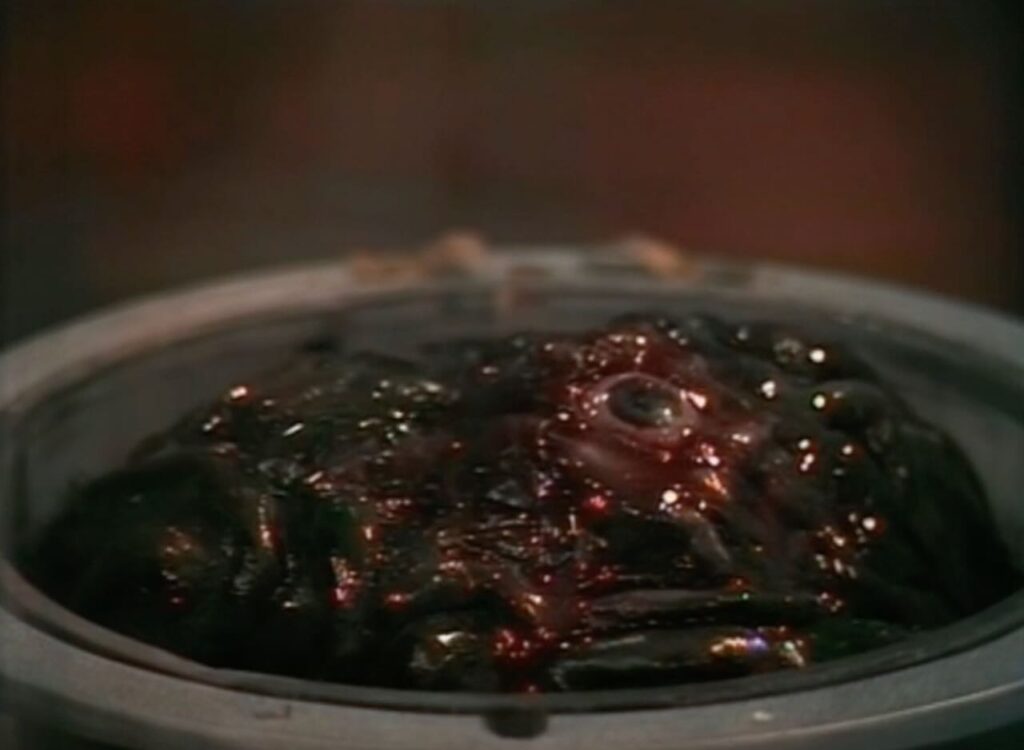
• There is only a brief appearance by the actual creature inside the Keller Machine, but it’s super creepy.

Bleah.
PakarPBN
A Private Blog Network (PBN) is a collection of websites that are controlled by a single individual or organization and used primarily to build backlinks to a “money site” in order to influence its ranking in search engines such as Google. The core idea behind a PBN is based on the importance of backlinks in Google’s ranking algorithm. Since Google views backlinks as signals of authority and trust, some website owners attempt to artificially create these signals through a controlled network of sites.
In a typical PBN setup, the owner acquires expired or aged domains that already have existing authority, backlinks, and history. These domains are rebuilt with new content and hosted separately, often using different IP addresses, hosting providers, themes, and ownership details to make them appear unrelated. Within the content published on these sites, links are strategically placed that point to the main website the owner wants to rank higher. By doing this, the owner attempts to pass link equity (also known as “link juice”) from the PBN sites to the target website.
The purpose of a PBN is to give the impression that the target website is naturally earning links from multiple independent sources. If done effectively, this can temporarily improve keyword rankings, increase organic visibility, and drive more traffic from search results.