So after a couple of months of being really behind with these posts, I’ve determined to get myself more on track if I can.
It’s been a busy time for my family, with me, my wife, all three of my daughters and my son-in-law all being involved in trips away, both in Australia and overseas, mostly (but not entirely) for the missions work that we are involved with. Some of those trips were on our own, some were with each other, but on none of them did more than two of us travel at once.
Trips we have returned from already include:
• My eldest daughter and son-in-law went to Africa working with some local people on a water filtration project
• My wife and middle daughter went to Indonesia to volunteer at a local school and to run a parenting seminar
• I travelled to another part of Western Australia (the state I live in) to help make a short film designed to be part of an identity-focused program, with the ultimate aim of reducing the disproportionate suicide statistics in this area of the country. The specific film is designed to be used as a discussion starter around the importance of forgiveness.
And current trips, that are still underway:
• My wife is now in Africa helping to run biblical worldview and education seminars with different groups of teachers that have been requesting this.
• My youngest daughter is on the other side of the country doing in-person intensive courses that are part of her (mostly) online degree in palaeontology.
So a lot of coming and going around these parts!
Also, my wife and I celebrated our 25th wedding anniversary at the start of this month. We had the time to get away to a really nice Airbnb a few hours away.


Especially leading into the busyness of the rest of the month, this was a very refreshing getaway together.
Anyway, when it comes to the stuff I read and watched, I got to a few interesting bits and pieces this month.

The Tokyo Zodiac Murders by Soji Shimada
A while ago I bought and read Murder in the Crooked House by Soji Shimada, and while I was a bit mystified by the incredibly long sequences of expositional dialogue during the section where the police are investigating a complex locked-room mystery, I came away hugely impressed by the elegance and cleverness of the actual solution. So I sought the only other one of Shimada’s many books that I could find that had been translating to English.
The experience of reading The Tokyo Zodiac Murders was very similar to the other book–once the crime is established, the investigatory sequences are very clinical, mostly taking the form of discussions between the two main characters reviewing evidence. And since this book is about a cold case–a series of bizarrely gruesome murders that took place decades earlier–that investigation begins almost at the very start of the book. But again, the solution is brilliant. It’s not just clever, it’s elegant, and turns a bewildering set of circumstances into something that is simple, surprising, and inspired.
What are those circumstances? Well they are truly grotesque. An apparently deranged artist writes a manifesto about his plan to murder his own daughters, step-daughters and nieces to cut out portions of their bodies to build a life-size doll of sorts that represents an idealised representation of womanhood. It’s all to do with his obsession with alchemy and astrology, which also informs his choice of what metal he will use to kill each woman, which part of her body he will cut out, and where he will bury the corpse.
But before he does any of this, he himself is murdered behind locked doors. And then not long after, another relative not mentioned in the letter is murdered in a possibly unrelated incident. And then someone actually carries out the murders of the six young women mentioned in the manifesto, burying their dismembered bodies in the way the dead artist described. The artist’s widow takes the blame, but her guilt remains questionable, and in the fiction of the novel the case develops a huge public following as multitudes of amateur detectives attempt to discover the location of “Azoth”, the name given to the mannequin presumably built out of all the missing parts of the slain women. But these attempts go unrewarded, and decades later the case falls into the hands of Kiyoshi Mitarai, the astrologer and detective who also featured in Murder in the Crooked House.
In the other book I imagined the character as something of a Japanese Matt Smith / Eleventh Doctor–a young man with manic energy constantly doing things that were utterly confusing to everyone around him, but that actually revealed an intense level of cleverness. In this book he has less opportunity to demonstrate traits like that, but he is still a quick and insightful thinker who of course does eventual unpack what really happened with all of the case’s seemingly impossible circumstances.
Of course I won’t spoil the solution here, but I will say the answer was satisfying and brilliant, and did for me make the experience of reading about such a horrifying crime worthwhile. I wasn’t sure because the story was far more grisly than I generally enjoy, but the resolution was interesting enough to make me glad that I had read it anyway. But probably only just, if I’m honest. Like I said I’m not aware of any of Shimada’s other books being available in English, but even if there were I think between the two I’ve read I’ve had my fill. At least for now.

Shazam vol 2: Moving Day
This is the second volume of a recent Shazam! series is by writers Mark Waid (up until about halfway through this volume) and Josie Campbell, and a variety of artists that I’m not familiar with (Emanuela Lupacchino, Mike Norton and Goran Sudžuna).
The adventures of Billy Batson and his heroic alter ago should be, for the most part, breezy, outlandish, fun, and that’s definitely the vibe that you get from this series. Amongst other concepts, there are some alien dinosaurs who really into paperwork, appearances by the Creeper and Black Adam, and a storyline where Zeus and the gods of Olympus try to move into the house that Billy shares with his foster siblings. At the same time, there’s a reasonably serious storyline about Billy becoming a magical leak and thus his super-powered side attempting to take over his mind and blank out certain memories.
Continuing on from the first collection, the series serves as a soft restoration of some of the more classic Shazam! status quo, without actually undoing all the stuff that has come in over recent years. Thus Billy still lives with the group of foster siblings that for instance were represented in the Shazam! movies, but for the time being all of them but Billy and Mary have been de-powered. And instead of referring to himself as “Shazam”, he’s known as “the Captain”. There’s some story reason for this that I can’t actually remember, but I appreciate it is a baby step back toward just calling him “Captain Marvel”, which would be a move I’d fully support.
Anyway, I don’t find the series highly memorable but it is diverting and a fun read. This Shazam! series ran for only 21 issues, which means it might possibly be completely collected in 1 or 2 more volumes. It’s not the sort of thing I’m itching to buy, but if they release them I’ll probably get around to picking them up at some point.

Fringe, seasons 1 & 2
I was on my own for a chunk of the month so with my TV viewing, I stayed away from the things I’m watching with my family. Instead I started watching Fringe for like the third time, and finally got past my initial revulsion (at how gross the show can be at times) and got into the characters and mysteries.
The show ran for five seasons starting in 2008 and was created amongst others, by J.J. Abrams and makes abundant use of his famous (or infamous) “mystery box” approach to storytelling. It has a concept similar to the X-Files–a division of the FBI is tasked to investigate crimes and events that seem unexplainable (the first episode features a passenger jet that lands after all the people on board have died via a freak effect that causes their bodies to crystallize), but it separates itself from the earlier show in a couple of ways
Most obviously, the characters are different. Anna Torv plays Olivia Dunham, a relatively normal agent (although as the series progresses she turns out to have more and more to do with the overall mythology of the show) and our ostensible point of view character. She works with Peter Bishop (Joshua Jackson), a combination of genius and con artist, and Peter’s mentally unstable father Walter (John Noble, in what is ultimately the most interesting performance), who was proficient in all sorts of “fringe science” study before having a mental breakdown that led him to be institutionalised for years.
As the show progresses, the secret backstories of all these characters are unpacked, as well as the connections between them. It all has to do with government and business conspiracies and fear of a forthcoming war with a parallel dimension. Leonard Nimoy guest stars in a few episodes as a figure critical to all this.
I have enjoyed binging my way through this series, as the plot has been unpacking itself at a pretty decent rate, better than I’d say Lost did. Almost all the big questions from the start of the show have actually been answered by the end of season 2, and I find myself wondering less “What is going on?” than I am “What will happen next?” And that’s a good thing.

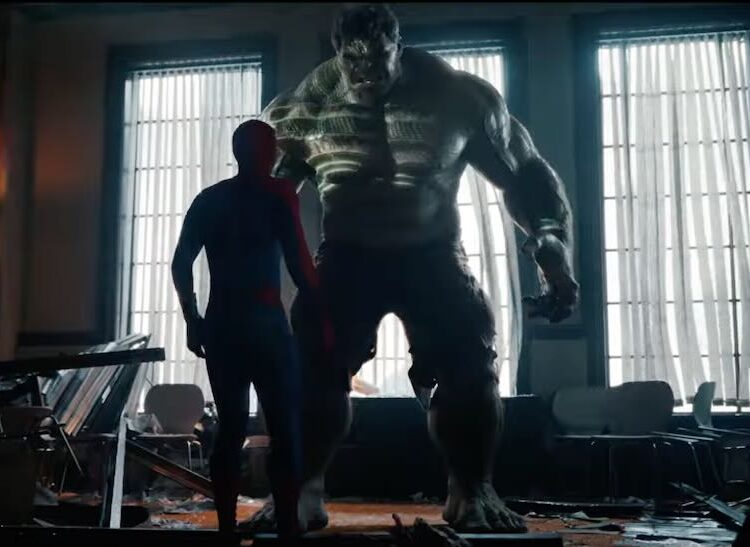
Beyond all of this I actually got to the cinema four times this month. That’s crazy and something that rarely happens. The first time was to see Supergirl, which I already wrote about (also see here for more Supergirl-themed stuff that I got to this month) and the last time was to see Spider-Man Brand New Day, which I also already wrote about. The second time was up north at a local open-air theatre, where I watched what was on offer, which was…

Toy Story 5
It’s not a hot take for me to say that the Toy Story franchise is an excellent trilogy that now has two extra instalments to it. Neither of those later movies are outright terrible, but neither has got the magic of that original three, although I think I’d put “5” above “4” (but I don’t know, it’s been a while).
The story this time around is largely about Jesse (the cowgirl towy voiced by Joan Cusack) who is confronted by the impact that “tech” (essentially, a computer tablet) has on Bonnie, the little girl that owns Jesse and the most of the Toy Story gang now. This forces Jesse to confront her own issues with abandonment. Eventually coming to the conclusion that “tech” is both inevitable and not necessarily the worst thing in the world, Jesse is aided by Woody, Buzz, and a whole bunch of others to help Bonnie not be crushed as a person by isolation and bullying.
There is a lot that works about Toy Story 5, including all the basics–the overall story, the characters and so on. In particular the depiction of how shut-down Bonnie has become due to various forms of online and in-person bullying felt to me very believable. But that doesn’t prevent the movie from having an overall aura of extraneousness: it just doesn’t feel “essential” in the way the first movies did.
In some ways the story feels likes its been cobbled together from three different episodes of some non-existent Toy Story TV show–like, here is one about Bonnie getting an iPad, here is one about Woody and Buzz competing to be Jesse’s deputy, and here is one about a whole bunch of new and improved Buzz toys that are confused about their identities. Like it’s all just a bunch of random ideas put together to make a movie in order to cash in on a popular brand. Which of course, it is.
Also, Toy Story strikes me as a world that just gets more confusing the more you add additional lore to it. Like what thing are actually alive, how much they all understand their nature, all of that. I found all those questions less distracting back in the comparatively simple days when there were just one or two movies.
The other movie I watched this month is one of the biggest releases of the year:

The Odyssey
More than I think any other movie, I feel like the online discourse about The Odyssey is less about its merits as a movie, and more about how it fares as an adaptation of the original text, or how it fares in its historical presentation. Things like that. I’ve read The Odyssey but back in high school and in general I find myself uninterested in considering the movie in the light of the source material.
So as a movie, I think The Odyssey is pretty good, or at least extremely impressive. Christopher Nolan is basically a master of using the tools of cinema to deliver an audio-visual experience, and that’s certainly what he does here. Like with almost everything of his that I’ve seen the movie makes me feel completely immersed in its world from a sensory perspective, whether that be out at sea, being chased by monsters, being stuck in a wooden horse, or dealing righteous fury down upon a bunch of obnoxious suitors.
But also similar to much of Nolan’s work, the movie rarely makes me feel deeply connected to its characters. The performances are all fine but the movie itself makes them feel a somewhat remote. There are moments when the dialogue feels like people are reading etchings off of statues, like they are playing to the myth rather than the people.
But even though this is an imperfection, it’s not really a complaint. The movie has got so much going for it that I only rarely missed that deeper emotional relationship with the people on the screen.
And even with that comment, I can also say I really enjoyed the late-film reversal of sorts, where we discover Odysseus’ PTSD (for lack of a more period-accurate term) related to the siege of Troy. I thought that one of the most meaningful character moments in the entire piece, if not the very most.

I saw The Odyssey with two of my daughters, one of whom is very familiar with Greek myth in general, and both of which are fans of something called Epic the Musical. Epic the Musical is a crowdfunding and fully produced musical concept album version of The Odyssey by Jorge Rivera-Herrans. I’ve lever listened to the whole thing but I’ve caught bits and pieces when my kids have been playing it out loud. My daughter’s perspective on the source material has led to some pretty funny conversations about it all.
They both liked the movie, but of them (all of my daughters are adults now) commented that she thought it was strange that The Odyssey treats the Greek gods as possibly not real, as the only one that we see (Athena) is arguably just a manifestation of Odysseus’ guilt over what happened in Troy, but we can still straight-up have witches, the cyclops, giants and so on. Meanwhile the other one said she thought the film had basically reduced Odysseus’ actual culpability in what happens to a bare minimum, which thought was disappointing.
Finally, one of them, he one with a particular interest in mythology, said she thought it was funny to imagine Homer’s Odysseus and Epic the Musical’s Odysseus. She thinks they would get into conflict, as one is more interested in protecting his men and the other just interested in getting home as quickly as possible. But then she says they both would be baffled by Nolan’s Odysseus. “What do you mean you don’t believe in the gods?!” they’d say. And they’d both be furious at the idea that he left Ithaca and Telemachus at the end.

Grounds for Murder
Another little thing I did this month was this murder mystery jigsaw puzzle. This is one of those puzzles that comes with a story (about 12 pages long) and then you are supposed to be able to work out the solution from the image in the puzzle. As such you make the puzzle without knowing what it’s actually going to look like.
I found it to be a pretty good puzzle. The picture is a bunch of luggage that’s been pulled open at the customs inspection point at the airport, with a variety of textures to work with, which makes putting it together without a reference image pretty fun.
But it’s not a good mystery. There are some obvious clues in the image (including one super-obvious one that my daughter and I missed as we were examining it) but the actual story that you are supposed to be able to put together is pretty oblique–it’s unlikely anyone would actually figure it out based on the clues. And it’s also just unrealistic that any bad guys would actually do what the story claims. Don’t read the next paragraph if you are actually worried about spoilers for this thing (my one daughter and her husband bought it at a second hand shop, and then gifted it to a family in our community who likes puzzles, who gave it to another friend who likes puzzles, who finally gave it to me).
Anyway, the mystery is based on the idea of some smugglers doing something shifty at a coffee shop, realising that somebody who saw you there is suspicious of what you are doing, murdering them, and then not changing your method of operation at all. In other words, you know someone’s “on to you” at the coffee shop, you kill them (which is way worse than what you were doing), but then you just keep doing the weird things at the coffee shop anyway.
So a good puzzle, but a disappointing mystery.
Now before I finish up this month there is one more thing I want to do.

Every episode of Star Trek: The Original Series, in alphabetical order
Sometimes I struggle to sleep. Recently, when I was trying to quiet my mind so I could drift off I found myself wondering if I could order ever episode of Star Trek (the original series) in alphabetical order, from memory. I am familiar with all of the original Star Trek episodes, but I don’t have any systematic way of bringing them to mind (ie I don’t know the order they came out in, etc) so I could only do this by trying to recall all the episodes that begin with an “A”, all the ones that begin with a “B” and so on (doing the traditional alphabetizing thing and ignoring it if “The” “A” or “An” appear at the beginning of the title.)
This became a preoccupation for a couple of weeks, not just when I was lying in bed. I purposely avoided actually looking at a list, and then finally a little bit ago, I was able to do it–I listed all 80 episodes of the original series (that counts the unaired pilot, The Cage, and both part of The Menagerie, which re-purposed most of the footage in The Cage) in alphabetical order, at least assuming that I have the names of the episodes correct (there is one I’m not sure about).
All of this was in my head. I never wrote them down, but I’m going to do so now. I’ve been waiting to finish this post to actually put it down, and since I actually figured it out mentally a couple of weeks ago (the last one to come to mind was The Squire of Gothos), I haven’t continued to go over it. So I’m not 100% that now I won’t struggle to remember something.
So yeah, I’m going to list them in “real time” here, as best as I remember them, and keep track of how long it takes me to do this. And then I will look up the list and see if I made any mistakes. (More and more as I go through life, I figure I must have some degree of neurodivergence. I think this is evidence).
Also, if it’s not clear, when I
So here we go: I’m turning on my timer…now.
- All Our Yesterdays
- The Alternative Factor
- Amok Time
- And the Children Shall Lead
- The Apple
- Arena
- Assignment: Earth
- Balance of Terror
- Bread and Circuses
- By Any Other Name
- The Cage
- Catspaw (took me a bit to recall this one)
- The Changeling
- Charlie X
- City on the Edge of Forever
- The Cloud Minders
- Conscience of the King
- The Corbomite Maneuver
- Court-Martial
- Dagger of the Mind
- Day of the Dove
- The Deadly Years
- Devil in the Dark
- The Doomsday Machine
- Elaan of Troyius
- The Empath
- The Enemy Within
- The Enterprise Incident
- Errand of Mercy
- For the World is Hollow and I Have Touched the Sky
- Friday’s Child
- The Galileo 7
- The Gamesters of Triskelion
- I, Mudd
- The Immunity Syndrome
- Is There in Truth No Beauty?
- Journey to Babel
- Let This Be Your Last Battlefield
- The Lights of Zetar
- The Man Trap
- The Mark of Gideon (I really struggled to remember this one)
- The Menagerie
- The Menagerie part II
- Metamorphosis
- Miri
- Mirror, Mirror
- Mudd’s Women
- The Naked Time
- Obsession
- The Omega Glory
- Operation: Annihilate!
- The Paradise Syndrome
- Patterns of Force (Another one I had a hard time remembering. I remember where on the list something should go, more or less, but so far there have been three that I had to really work to bring back to mind)
- A Piece of the Action
- Plato’s Stepchildren
- A Private Little War
- Requiem for Methuselah
- Return of the Archons
- Return to Tomorrow
- The Savage Curtain
- Shore Leave
- Space Seed
- Spectre of the Gun
- Spock’s Brain
- The Squire of Gothos
- A Taste of Armageddon
- This Side of Paradise
- That Which Survives
- The Tholian Web
- Tomorrow is Yesterday (this is the one I’m not sure if I have the right title for. Maybe it’s actually “Yesterday is Tomorrow”? I don’t think so, but I’m not certain)
- The Trouble with Tribbles
- Turnabout Intruder
- The Ultimate Computer
- The Way to Eden
- What are Little Girls Made Of? (I almost skipped this one and went right to the next! But I remembered before I hit “enter”)
- Where No Man Has Gone Before
- Who Mourns for Adonais? (I’m not sure if I’ve spelt that correctly)
- Whom Gods Destroy
- Wink of an Eye
- Wolf in the Fold
Done! 17 minutes, 31 seconds. That definitely took me longer because I stopped reviewing it some time ago.
So now let’s look at a list and see if I made any mistakes (these refer to the episodes in their broadcast order, not alphabetical order)
• I spelled “maneuver” correctly, after not being sure. It’s not how it’s spelled in Australia (we say “manoeuvre”)
• Hmm, I had to check the actual episodes for this, but both parts of “The Menagerie” are credited just as that, “The Menagerie.” Both parts add “Part I” or “Part II” (as is appropriate) after the title, which is in quotation mark. So at least one of my answers here is not quite correct.
• I forgot the “The” at the start of “The Conscience of the King”
• “Tomorrow is Yesterday” is the correct title. Hooray!
•.”Court Martial” doesn’t have a hyphen in it.
• There’s a “The” at the start of “The Return of the Archons”
• The same for “The Devil in the Dark”.
• And “The City on the Edge of Forever.” Drat!
• According to the internet, “Operation–Annihilate!” has got a dash, not a colon
• I did get “Who Mourns for Adonais?” correct, in spite of my uncertainty.
• Technically, it seems I should have listed “The Enterprise Incident” as “The Enterprise Incident”
• In what I think is my biggest mistake so far, what I put down as “Let This Be Your Last Battlefield” is actually called “Let That Be Your Last Battlefield”.
Okay, so that’s nine episodes that I made some sort of mistake with. Two of them were due to punctuation errors and one because I didn’t put something in italics. Four of them I forgot the “The” at the start of the title, and I was a bit confused by how they formatted the title of “The Menagerie” for its two separate parts. And then I got one word completely wrong (writing “This” instead of “That”) for one title.
Still, I think that’s pretty good considering it was all a mental exercise, up until now.
Incidentally, there are no original Star Trek episodes whose titles begin with H, K, Q, V, X, Y or Z. I wonder how long each of those took to come along?
• “Yesteryear” is the second episode of the Animated series in the 1970s.
• “How Sharper than a Serpent’s Tooth” came toward the end of the Animated series.
• “Q Who?” came along in Next Generation’s second season
• “Violations” was a fifth season Next Generation episode
• “The Killing Game” was a two-parter in the fourth season of Star Trek Voyager.
• Star Trek Enterprise opened its third season with “The Xindi”.
• And it closed that same season with “Zero Hour”–Star Trek Enterprise brings it home!
Okay, enough of this. Time get some dinner.
PakarPBN
A Private Blog Network (PBN) is a collection of websites that are controlled by a single individual or organization and used primarily to build backlinks to a “money site” in order to influence its ranking in search engines such as Google. The core idea behind a PBN is based on the importance of backlinks in Google’s ranking algorithm. Since Google views backlinks as signals of authority and trust, some website owners attempt to artificially create these signals through a controlled network of sites.
In a typical PBN setup, the owner acquires expired or aged domains that already have existing authority, backlinks, and history. These domains are rebuilt with new content and hosted separately, often using different IP addresses, hosting providers, themes, and ownership details to make them appear unrelated. Within the content published on these sites, links are strategically placed that point to the main website the owner wants to rank higher. By doing this, the owner attempts to pass link equity (also known as “link juice”) from the PBN sites to the target website.
The purpose of a PBN is to give the impression that the target website is naturally earning links from multiple independent sources. If done effectively, this can temporarily improve keyword rankings, increase organic visibility, and drive more traffic from search results.